
Embarking on your trading journey involves mastering a range of indicators and tools designed to enhance your decision-making and accuracy. By utilizing technical analysis, you delve into the patterns and trends that sculpt market movements. Moving averages, such as the simple moving average and the exponential moving average, highlight the average price over a specific period. The relative strength index (RSI) helps you gauge asset momentum, while the moving average convergence divergence (MACD) identifies potential buy or sell signals. Tools like Bollinger Bands, the stochastic oscillator, and the Ichimoku Cloud offer a nuanced understanding of volatility and trend direction.
Support and resistance levels guide you in predicting potential price reversals, and volume analysis offers insights into the strength of price moves. Fibonacci retracement assists in identifying strategic entry and exit points, whereas candlestick patterns reveal market sentiment. Trend lines draw the trajectory of market direction, complemented by momentum indicators and volatility indicators like the average true range (ATR). Chart patterns such as those recognized by Elliott Wave Theory add depth to market analysis. Advanced tools like the Vortex Indicator and average directional index (ADX) further refine your trading signals. Mastering these elements on various trading platforms, alongside pivotal points and on-balance volume (OBV), allows for proficient navigation through the ever-dynamic landscape of trading.
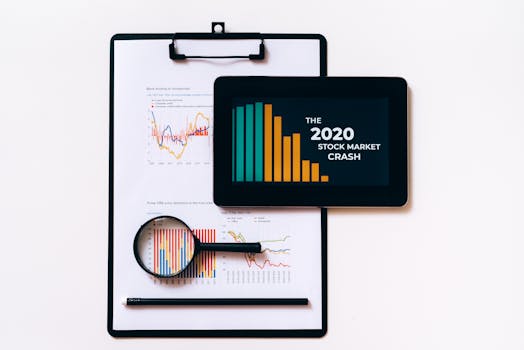
Understanding the foundational principles of trading is crucial for any aspiring trader. Technical analysis plays a significant role, enabling you to predict future price movements based on historical data. By examining moving averages, like the exponential moving average (EMA) and the simple moving average (SMA), you can smooth out price data to identify trends over various timeframes.
Consider the relative strength index (RSI) and the moving average convergence divergence (MACD) as indispensable tools to understanding market momentum. While RSI measures the speed and change of price movements, MACD highlights the relationship between two moving averages, helping you spot potential trading opportunities. Bollinger Bands and the stochastic oscillator further refine your volatility assessment, adding a layer of precision to your analysis.
Support and resistance levels, combined with volume analysis, help you determine market entry and exit points. Fibonacci retracement, rooted in mathematical principles, brings in a unique perspective, offering you strategic points of price correction. Candlestick patterns and their variations, such as engulfing and hammer patterns, provide visual cues about market sentiment, supplementing the broader analysis formed through trend lines.
Looking at these concepts through the lens of various trading signals and platforms, you can see that integrating them holistically enhances your trading performance. With tools like the Ichimoku Cloud, ADX (average directional index), and pivot points, you gain a comprehensive outlook that is not just about identifying trades but excelling in them.
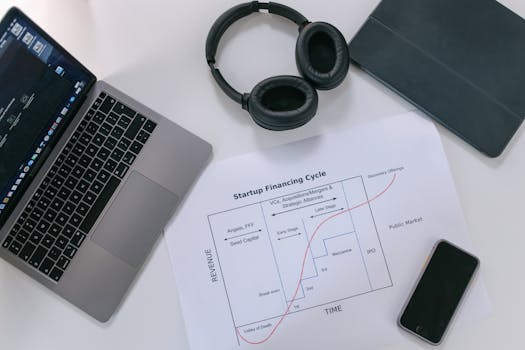
Technical analysis is the backbone of strategic trading, relying on historical price data and volume to forecast future market movements. Tools like moving averages, such as the moving average convergence divergence (MACD), help you discern trends and shifts in market momentum. The relative strength index (RSI) also proves invaluable, measuring the speed and change of price movements to signal overbought or oversold conditions.
Support and resistance levels act as key indicators of potential market reversals. Volume analysis complements these levels by providing insights into the strength of price movements. Fibonacci retracement offers an essential behind-the-scenes detail: it divides a price move into key levels, helping you identify potential points of continuation or reversal. Bollinger Bands and the stochastic oscillator further enhance your market analysis by evaluating volatility and momentum.
Candlestick patterns and trend lines are vital for visualizing market sentiment. Each candlestick tells a story, whether it's bullish, bearish, or neutral. Momentum indicators such as the ADX (average directional index) and volatility indicators like the average true range (ATR) provide deeper insights into market dynamics, whereas pivot points and Ichimoku Cloud add an extra layer of depth to your analysis, aiding you in making well-informed trading decisions.
What most people don’t see about mastering technical analysis is the behind-the-scenes detail that involves integrating multiple indicators for a comprehensive perspective. From chart patterns to the parabolic SAR and Vortex Indicator, each tool weaves into a complex tapestry that enhances the accuracy of your trading signals. Effective use of trading platforms magnifies these insights, enabling you to navigate the intricacies of market behaviors skillfully.

Indicators serve as the compass in the vast ocean of trading, guiding you through market complexities with precision and insight. Each type of indicator has a unique role, starting with moving averages, which smooth out price data to reveal consistent trends. The simple moving average (SMA) and exponential moving average (EMA) are indispensable for identifying long-term and short-term market directions.
Momentum indicators like the relative strength index (RSI) and moving average convergence divergence (MACD) provide critical insights into market momentum. These indicators highlight potential overbought or oversold conditions, signaling when it might be wise to enter or exit a trade. The stochastic oscillator, another key momentum indicator, offers a comparative analysis of an asset’s closing price to its price range over a specific period, sharpening your trading strategy.
Volatility indicators, such as the average true range (ATR) and Bollinger Bands, help you assess market volatility, enabling you to gauge the risk associated with particular trades. Volume analysis, including tools like on-balance volume (OBV), complements these by providing clues about the strength of price movements. Support and resistance levels, along with Fibonacci retracement, guide you in anticipating market reversals, making them essential for plotting entry and exit points.
One unpopular opinion about the role of indicators in trading is that relying too heavily on them can sometimes lead to analysis paralysis. Overloading your charts with too many indicators might obscure clear trading signals. Instead, a balanced approach that integrates a few well-chosen indicators, such as trend lines paired with the ADX (average directional index) and one or two momentum indicators, can often provide clearer and more actionable insights.
Advanced tools, including the Ichimoku Cloud and parabolic SAR, offer multi-dimensional analysis, enhancing your market forecasts. The Vortex Indicator and pivot points add depth to your technical analysis, while candlestick patterns and chart patterns, supported by the principles of Elliott Wave Theory, round out a holistic view. Using these tools effectively on trading platforms can transform raw data into insightful trading signals, streamlining your path to trading success.

Moving averages are fundamental tools in the arsenal of any trader, providing essential insights into market trends. The simple moving average (SMA) calculates the average price over a specified number of periods, smoothing out price data to help you identify trends more clearly. This contrasts with the exponential moving average (EMA), which places more weight on recent data, making it highly responsive to the latest market changes.
These averages are particularly useful for identifying support and resistance levels, offering clues about potential price turns. By combining moving averages with other indicators like the relative strength index (RSI) or Bollinger Bands, you can refine your entry and exit strategies. The moving average convergence divergence (MACD) goes a step further, utilizing two EMAs to generate buy or sell signals based on their crossover points.
To make the most of moving averages, try using different timeframes to better understand both short-term and long-term trends. For instance, a 50-day SMA can help you spot intermediate trends, while a 200-day EMA might be more suitable for identifying long-term market directions. Cross-referencing these with momentum indicators and volatility indicators can enrich your technical analysis, providing a more nuanced market outlook.
Incorporating moving averages into your trading routine can also complement volume analysis and trend lines, adding another layer to your market predictions. Whether you’re evaluating pivot points or analyzing Fibonacci retracement levels, the combination of moving averages with other tools, such as the parabolic SAR or Ichimoku Cloud, can significantly enhance your trading signals, optimizing your decision-making process on various trading platforms.

The Relative Strength Index (RSI) is a powerful momentum oscillator that measures the speed and change of price movements. Developed by J. Welles Wilder, RSI ranges from 0 to 100, providing insights into whether an asset is overbought or oversold. Typically, an RSI above 70 suggests an overbought condition, whereas a reading below 30 indicates an oversold situation, guiding you on optimal entry and exit points in your trades.
Leveraging RSI becomes even more effective when combined with other indicators like moving averages and the moving average convergence divergence (MACD). These combinations can confirm market trends, enhancing your ability to make well-informed trading decisions. The RSI can also be complemented by tools such as Bollinger Bands and the stochastic oscillator, adding layers of data to fine-tune your market analysis.
According to recent studies, the RSI's ability to predict price reversals can be attributed to its foundation in mean reversion theory, which explains how prices tend to return to their average levels over time. This scientific explanation underscores why RSI remains a staple in technical analysis, offering both a historical perspective and predictive insights.
To harness the full power of RSI, consider integrating it into your broader technical analysis framework. Whether you are analyzing trend lines, Fibonacci retracement levels, or volume analysis, RSI can dramatically improve your trading signals. By understanding its role and synergistic capabilities with other momentum indicators and support/resistance levels, you can navigate trading platforms more effectively and optimize your strategies.
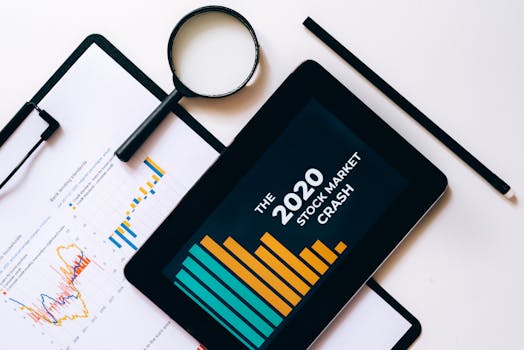
Bollinger Bands are a versatile tool in the realm of trading, utilized primarily to measure market volatility and identify potential overbought or oversold conditions. Comprising three lines - the middle band (a simple moving average), and an upper and lower band that represent standard deviations - Bollinger Bands adapt to market conditions, expanding during high volatility and contracting during low volatility.
Using Bollinger Bands in conjunction with indicators like the RSI or MACD can offer more nuanced insights. For example, combining Bollinger Bands with the RSI can help you determine if the market is truly overbought or oversold, thereby enhancing your trade timing. Similarly, the moving average convergence divergence (MACD) can confirm trend strength, offering additional layers to your technical analysis.
Think of Bollinger Bands as a flexible rubber band around price movements. Just like how a rubber band stretches and contracts based on pressure, Bollinger Bands expand and contract in response to market volatility. This visual imagery helps you understand their behavior; when the bands are wide, expect high volatility, and when narrow, anticipate a period of low volatility.
To master Bollinger Bands, integrate them with support and resistance levels, trend lines, and volume analysis. This multi-dimensional approach allows you to anticipate market moves more accurately. Whether you're relying on Fibonacci retracement or examining candlestick patterns, incorporating these bands enriches your trading signals, making your strategies on various trading platforms more robust and comprehensive.
Get free resources, tips & tricks, exclusive news, and special offers by joining the Cryptonite Newsletter.





.svg)